Mexico's Security Dilemma
July 14, 2026
9:00am
Webinar
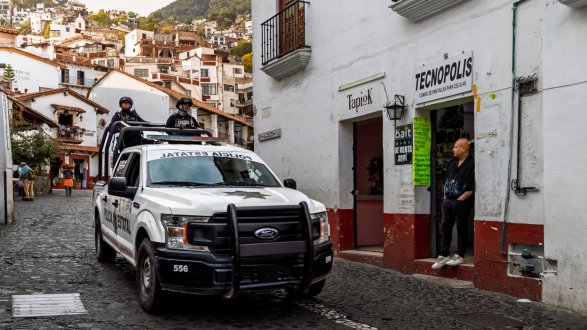
Two decades after Mexico declared war on its drug cartels, organized crime continues to challenge state authority, fuel record levels of violence, and strain one of the world's most consequential bilateral relationships. On Tuesday, July 14, at 9 am PT, the Pacific Council will host a webinar on the security crisis reshaping U.S.-Mexico relations. The discussion will examine how the Sheinbaum administration is navigating mounting pressure from Washington to dismantle cartel networks while defending Mexico's constitutional sovereignty against the prospect of unilateral U.S. intervention. The event will feature Lila Abed, Director of the Mexico Program at the Inter-American Dialogue; Dr. Cecilia Farfán-Méndez, Head of the North American Observatory at the Global Initiative against Transnational Organized Crime; Dr. Vanda Felbab-Brown, Senior Fellow in Foreign Policy, Director of the Initiative on Nonstate Armed Actors, and Co-Director of the Africa Security Initiative at the Brookings Institution; and Clare Ribando Seelke, Specialist in Latin American Affairs at the Congressional Research Service.
The security landscape has grown significantly more complex in recent months. The Trump administration's designation of six major Mexican cartels as Foreign Terrorist Organizations has fundamentally altered the legal and diplomatic terrain, expanding U.S. authority for extraterritorial operations and placing Mexican officials under greater scrutiny for alleged cartel links. The killing of Jalisco New Generation Cartel (CJNG) leader "El Mencho" in February 2026, while a landmark achievement for bilateral intelligence cooperation, triggered a wave of retaliatory violence across Mexico and exposed the fragility of security gains. Meanwhile, revelations of covert CIA operations on Mexican soil have intensified an already volatile debate over the boundaries of joint counternarcotics efforts. The central question for both governments is whether the model of deep cooperation without intervention can survive a political environment in Washington that increasingly treats the drug war as a national security emergency.
Why It's Important:
- Washington's designation of the Sinaloa Cartel, CJNG, and four other groups as Foreign Terrorist Organizations marks a decisive break from decades of treating drug trafficking primarily as a law enforcement matter. According to CFR, Mexico has seen more than 463,000 homicides since 2006, with cartels now functioning as quasi-governmental entities in parts of the country.
- CIA operatives have directly participated in lethal operations against cartel members inside Mexico, CNN reported, representing a significant escalation of U.S. intelligence activity on Mexican soil.
- The White House's National Drug Control Strategy 2026 formalizes the most aggressive U.S. anti-narcotics posture in modern history, designating fentanyl and its precursors as weapons of mass destruction and announcing the end of what it terms the "era of passive containment."
To register for this webinar, visit the Zoom Registration Page.
Guest Speaker
Lila Abed is the director of the Mexico Program at the Inter-American Dialogue. Prior to joining the Dialogue, she served as director of the Wilson Center’s Mexico Institute. Abed was a White House correspondent for the international news channel NTN24. Before this role, she was a public policy advisor for Latin America at the international law firm Covington & Burling in Washington, DC.
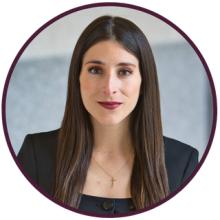
She gained extensive experience in various public institutions, serving as general director for international cooperation at Mexico’s Office of the Attorney General and as chief of staff to the attorney general. She also held the role of international affairs advisor to the attorney general.
After running for a seat in Mexico City’s local congress, Abed became secretary of international affairs for the executive committee of the Partido Revolucionario Institucional (PRI) and served as senior advisor to the chairman of the Foreign Relations Committee in Mexico’s Chamber of Deputies. She has also worked in diplomatic posts at the Mexican embassies in Canada and the United Kingdom.
An avid international analyst, Abed shares her expertise across a range of media networks in both the United States and Mexico. She has been featured on NPR, CBS, PBS, CNN, Telemundo, Univision, Al Jazeera, BBC, Radio Fórmula, ADN40, El Heraldo de México, and Opinión51.
She holds a master’s degree in Latin American studies and government from Georgetown University. She graduated magna cum laude from Boston College with a major in international studies and Hispanic studies, and a minor in Chinese.
Guest Speaker
Dr. Cecilia Farfán-Méndez is Head of the North American Observatory at the Global Initiative against Transnational Organized Crime. Cecilia is an expert on Mexican organized crime, US-Mexico security cooperation, and gender mainstreaming. Her work focuses on understanding the business models of criminal groups. Before joining GI-TOC, Cecilia was Head of Research at the Center for U.S-Mexican Studies at the University of California San Diego.
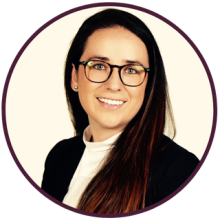
Cecilia has extensive experience with policy engagement, testifying before the U.S. Senate Committee on the Judiciary and the House of Representatives Committee on the Judiciary on issues related to the U.S-Mexico border and criminal markets. In multilateral settings, she has consulted for the United Nations Office on Drugs and Crime, publishing the first UN-issue paper on gender and organized crime; the Organization of American States, collaborating on the development of the methodology for measuring the gendered impacts of firearms arms trafficking in the Western Hemisphere; the Deutsche Gesellschaft für Internationale Zusammenarbeit (GIZ), U.S. Institute of Peace, and USAID.
Cecilia regularly guest lectures at the U.S. Foreign Service Institute and has trained public officials from the U.S, Latin America, Caribbean, and Europe. Cecilia is a member of the Urban Violence Research Network and holds affiliations with the Institute on Global Conflict and Cooperation at UC San Diego and the Center for Studies on Security, Intelligence, and Governance (CESIG) at the Instituto Tecnológico Autónomo de México (ITAM).
A Fulbright scholar, Cecilia received her doctorate in political science from UC Santa Barbara, her master’s degree in international affairs from Columbia University’s School of International and Public Affairs, and her bachelor’s in international relations from the Instituto Tecnológico Autónomo de México (ITAM).
Guest Speaker
Dr. Vanda Felbab-Brown is a senior fellow in Foreign Policy at the Brookings Institution. She is also the director of Brookings’ Initiative on Nonstate Armed Actors and co-director of the Africa Security Initiative at Brookings. She directs The Fentanyl Crisis in North America and the Global Reach of Synthetic Drugs and is the host of the podcast show The Killings Drugs. Previously, she was also the co-director of the Opioid Crisis in America: Domestic and International Dimensions. Dr. Felbab-Brown is an expert on international and internal conflicts, insurgency, terrorism, urban violence, and illicit economies. Her fieldwork has covered Afghanistan, South Asia, Myanmar, Indonesia, the Andean region, Mexico, Iraq, Somalia and the Horn of Africa, Nigeria, and other African regions. In 2020 and 2021, Dr. Felbab-Brown served as a senior advisor to the congressionally-mandated USIP Afghanistan Study Group.
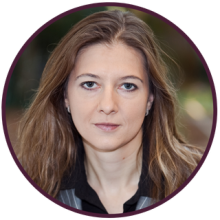
She is the author of five books - Narco Noir: Mexico’s Cartels, Cops, and Corruption (forthcoming); The Extinction Market: Wildlife Trafficking and How to Counter It (2017); Militants, Criminals, and Warlords: The Challenge of Local Governance in an Age of Disorder (2017; co-authored); Aspiration and Ambivalence: Strategies and Realities of Counterinsurgency and State-Building in Afghanistan (2013); and Shooting Up: Counterinsurgency and the War on Drugs (2010) as well as many policy reports, articles, opeds, and congressional testimonies. She frequently consults for the U.S. government. A recipient of numerous awards, Dr. Felbab-Brown received her Ph.D. in political science from MIT and her B.A. in government from Harvard University.
Moderator
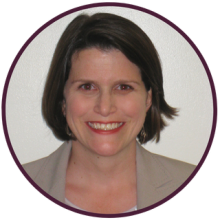
Clare Ribando Seelke is a Specialist in Latin American Affairs at the Congressional Research Service. CRS is a nonpartisan research agency that serves the Members and Committees of Congress and their staffs and is located in the Library of Congress. Ms. Seelke came to CRS in 2003 as a Presidential Management Fellow (PMF). As part of her fellowship, she completed rotations with the State Department in the Dominican Republic and with the U.S. Agency for International Development in Washington, D.C. She currently focuses on Mexico, Venezuela, and Central America, with a special focus on security issues and migration. During her tenure at CRS, Ms. Seelke has published numerous reports and confidential memoranda on both country-specific and regional issues in the Western Hemisphere. In May 2013, she testified before the U.S. House of Representatives on the evolution of U.S.-Mexican security cooperation under the Mérida Initiative. In August 2017, Seelke completed a Fulbright Specialist grant in Mexico, during which she delivered lectures at 15 Mexican institutions and universities on bilateral relations. Ms. Seelke holds a Master of Public Affairs and a Master of Arts in Latin American Studies from the University of Texas at Austin. Prior to graduate school, she earned her undergraduate degree from the University of Notre Dame and volunteered in Guayaquil, Ecuador.
To register for this webinar, visit the Zoom Registration Page.